I'm an AI evangelist who has worked closely with staff and executives across numerous enterprises to develop a true vision and understanding of what AI could do for them. I have developed seven AI platforms that are in production: five founder-built products and two inside heavily regulated city government. They are grounded in 17 years of experience across infrastructure, security, architecture, project/product management, and adoption. Everything below is live and in active use.
This page splits the work in two: the five products I built under my own name, then the two AI platforms I built inside West Hollywood. Product, architecture, security, launch, and adoption, the whole thing instead of just the impressive middle. All seven are in production.

Ask a city anything. Get proof, not guesses.
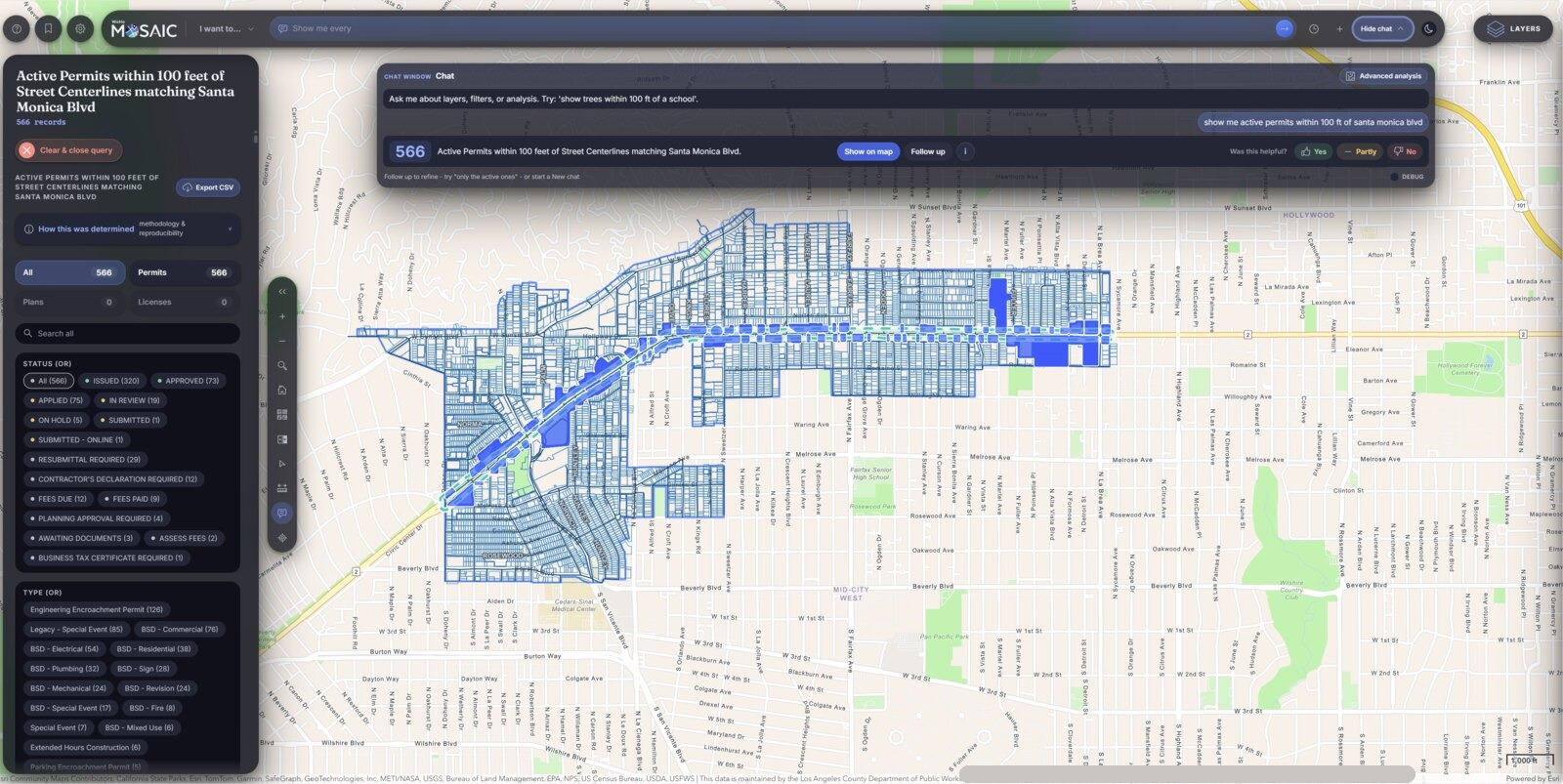
MOSAIC is the geospatial system I kept wishing cities had: a place where staff can ask deeply complex analytical questions in plain English and get back beautifully mapped results, data exports, and a clear audit trail. The AI reads intent and writes structured JSON. A deterministic engine does the actual work, choosing layers, drawing buffers, and computing intersections. The AI never touches the underlying data. It translates the question; the engine proves the answer. This allows for complete transparency, full privacy, regulatory compliance, and a first in the world legally defensible system.
Dreamt up and built by me. The platform has been deployed inside the City of West Hollywood under a non-exclusive agreement, allowing the City to benefit from this transformative technology, and for me to commercialize it, using the City as a testbed and client.
The result on the live map. 566 active permits within 100 ft of Santa Monica Blvd, mapped and exportable, from a single plain-English question.
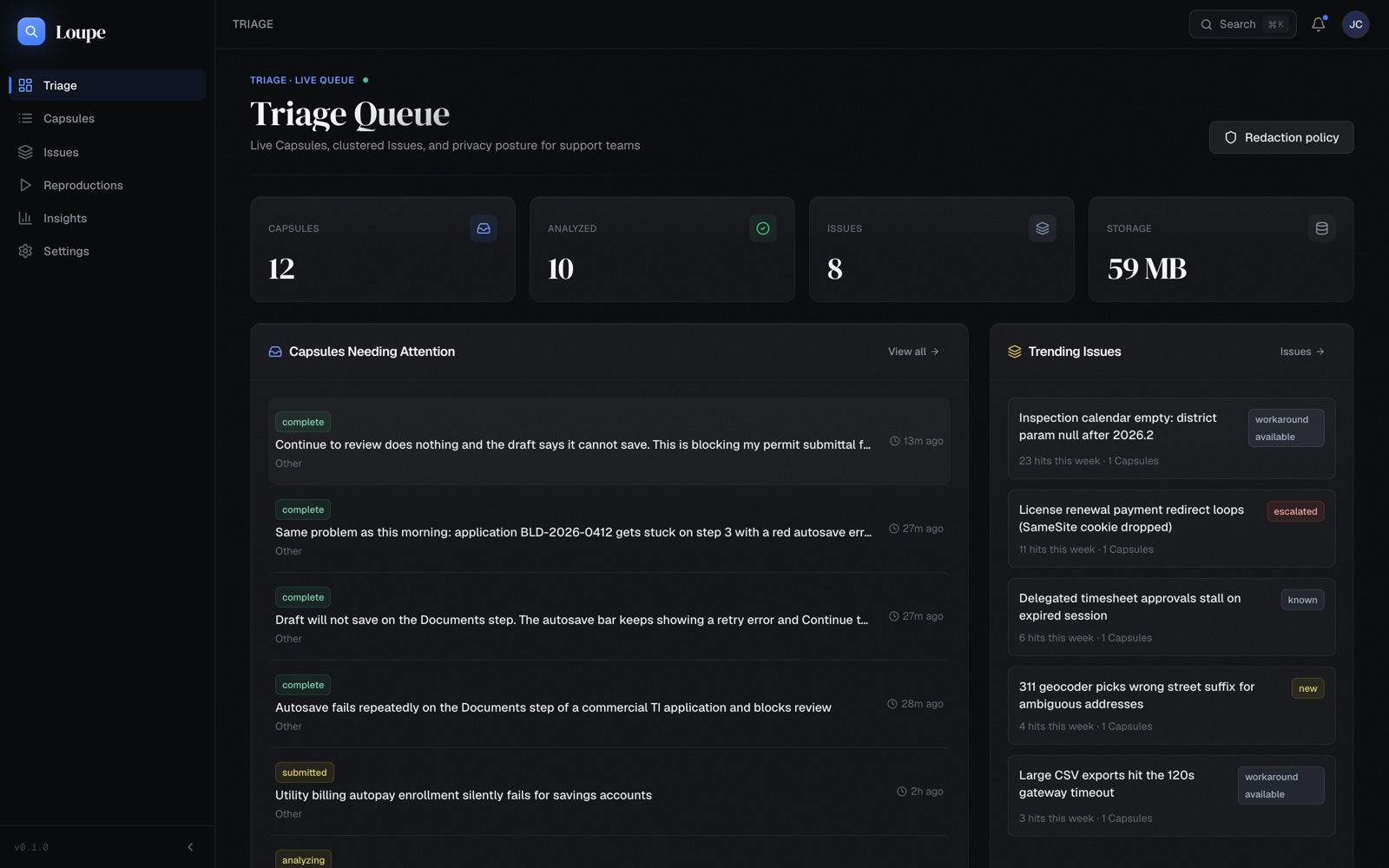
Complete files, before a human opens them.
My second first-of-its-kind system, and a personal build that shipped to production in the City. It's an orchestrator built on top of MOSAIC's deterministic geospatial pipeline: every submission is checked against requirements, each attachment validated against its stated purpose, GIS overlays cross-referenced for historic status, fault zones, and transit proximity, and statutory deadlines flagged, before a planner ever opens the file. Leveraging the MOSAIC backend is what lets it screen submissions in ways no permit screening platform in the world can.
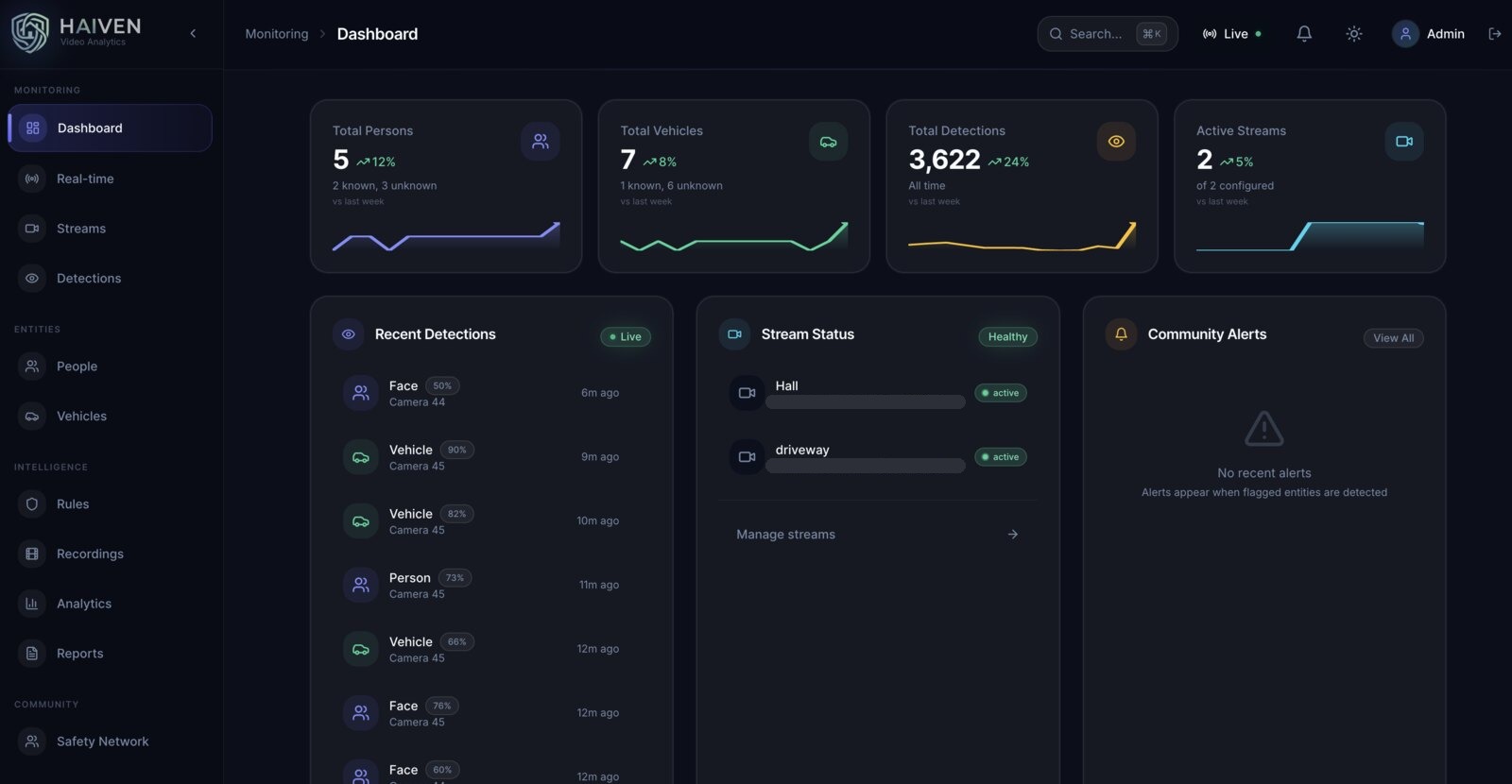
Live monitoring. On-device detections stream in, the vehicle directory is built by edge license-plate recognition, and community alerts arrive already PII-fuzzed. Tap a thumbnail to move through the product.

Community safety, with privacy as the architecture.
An autonomous community-safety platform where privacy is foundational. Facial recognition and license-plate recognition run on-device at the edge, so footage never leaves the home without the user's explicit consent. Residents use an intuitive interface to define their own alert and recording rules, and community reports are PII-fuzzed before anyone else sees them.
A product tour. The member dashboard with karma and reliability scores, the live camp map, shift scheduling, and the member directory. Play the tour, or tap through the screens.
Operations software for a pop-up city in the desert.
Burning Man theme camps are small cities with volunteer governments. PlayaNexus gives them a back office where non-technical leads run everything: shifts, tasks, check-ins, and the camp map. The boring parts are a game, with karma points, reliability scores, and a leaderboard that turns chores into something people volunteer for.
One operator, every association. Assistance requests auto-route and auto-assign to trusted vendors, each invoice is audited against its work order before payment, and the CC&R assistant answers homeowners with citations to the association's own governing documents and the Civil Code.
HOA management, with an AI back office.
A multi-tenant platform that runs HOA operations end to end. A retrieval assistant grounded in each association's own CC&Rs answers homeowner questions with citations, and the operational loop below runs on its own.
By day, the same hands
run a city's AI program.
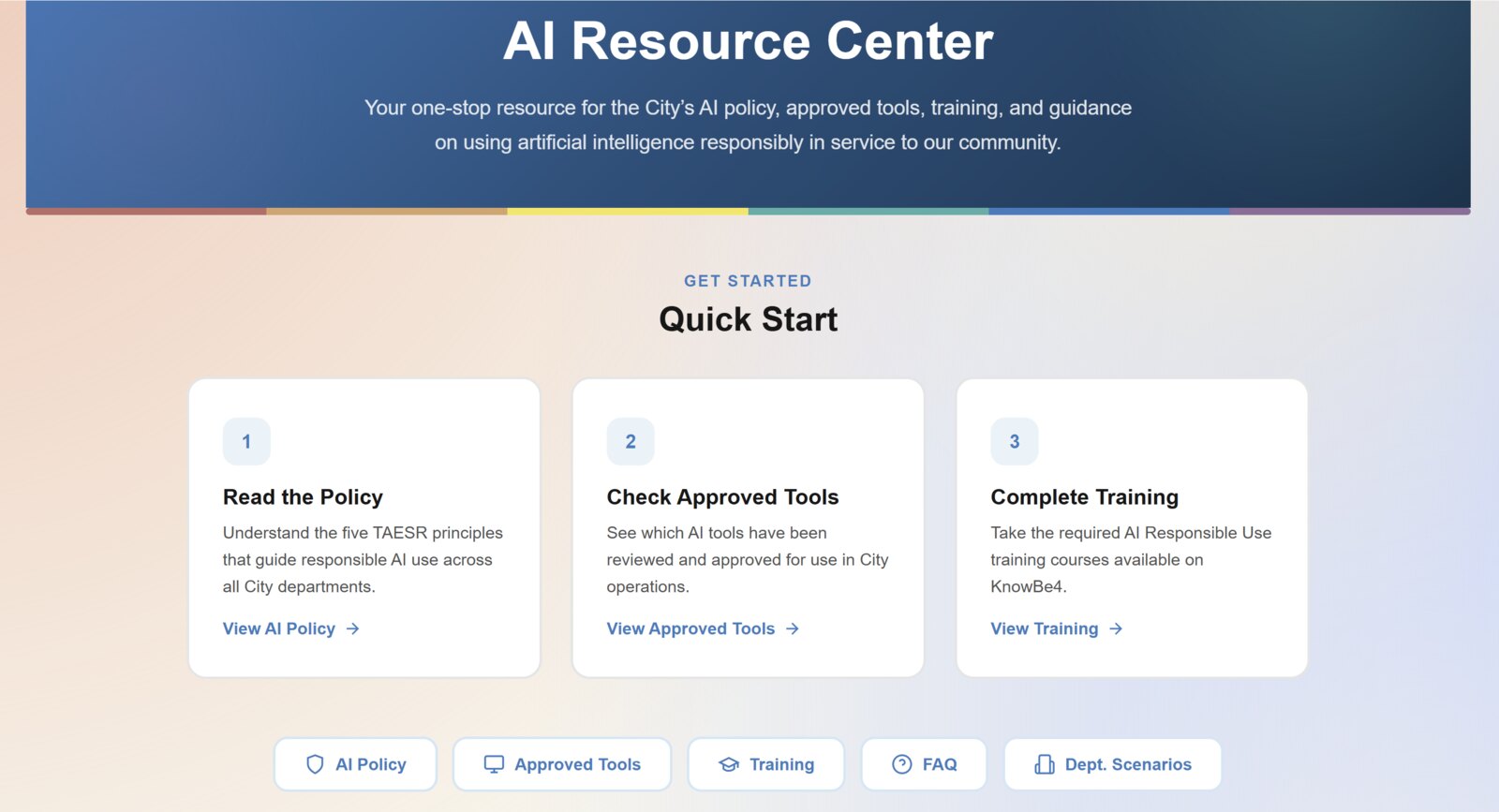
Strategy, a usage policy written with executive leadership, an evaluation gate every tool clears before launch, staff training, and the systems below. All built hands-on, inside one of the more regulated environments in American local government. It's also where MOSAIC and its permit orchestrator prove themselves in daily use.
Public, live, no login. Watch the tour, or open the crash map, the yearly corridor trends, and the density heatmap. Every view runs on the city's full collision record.
Twelve years of collisions, made legible.
A public dashboard over the city's full collision record. A traffic engineer, a council member, or a resident can slice 2,700+ crashes by severity, mode, corridor, and time of day, watch the trends move, and see the high-injury network the way planners do. No GIS seat, no training, no login.
"You've set the standard for Vision Zero dashboards globally."
Feedback from the Vision Zero communityTriages every ticket, reads team calendars before routing, balances workload by complexity, chases deadlines, and watches sentiment. When a requester's tone shifted from calm to frustrated, it escalated on its own. No human flagged it.
The desk runs itself.
Every incoming ticket enters an autonomous loop. The agent reads the request, checks team calendars for availability, scores the ticket's complexity, and routes it to the right person. It tracks deadlines and follows up. It also watches the conversation's tone. When frustration creeps in, it escalates before anyone asks it to.
Reads every agreement against the City's contracting standards. It returns an executive summary with a risk rating, findings ranked by severity, and redlines with exact replacement language. Each finding is tied to a specific statute.
A second set of eyes for counsel.
Every agreement the City signs passes through this agent first. It reads the full contract against the City's standards, produces an executive summary with an overall risk rating, ranks findings by severity, and writes redlines with exact replacement language. Each redline is cited to the municipal code or the California Civil Code. Counsel gets a marked-up document and a map of what matters, not a blank page.
Tools without policy create risk; policy without tools guides blindly. At WeHo, they landed together, and adoption followed because people trusted what went live.

Seventeen years across systems administration, project management, cybersecurity, and enterprise architecture. The last twelve have been inside government, where the work has to survive audits, meetings, budgets, politics, and the person who just needs the thing to work. Add a master's in organizational psychology and four years as a union lead negotiator: I build from the metal up, and for the people layer on top.
A system that isn't live is still a slide. I measure my work by what an operator can do today that they couldn't do yesterday, and by the hours that move as a result.
I ran the servers, the networks, and the SIEM long before I touched a model. Seventeen years of systems, security, and project delivery sit under this work, which means I do not treat AI as mist or magic. It's engineering, responsibility, and follow-through.
I wrote a citywide AI policy with a City Attorney and built the evaluation gate every tool passes before launch. Guardrails shipped with the tools, which is exactly why people trusted them enough to adopt them.
I sit with the people who own the work before I design anything, and I don't call a project done at deploy. Done is when the old spreadsheet is deleted and nobody wants it back.
"The hard part of enterprise AI isn't the model. It's the last mile into someone's Tuesday."
Systems administration, networking, project management, and cybersecurity. The unglamorous years that make everything above trustworthy: I know what's under every abstraction I build on.
Brought in to rebuild West Hollywood's aging infrastructure. The role grew into organization-wide solution architecture: ERP, GIS, permitting, communications, and security.
Technical Lead from RFP through implementation. Three fragmented permitting systems became one, with full adoption, zero shadow systems, and departments thanking IT for the change.
From no remote capability to a fully secured, organization-wide setup in under three weeks, with 100% service continuity. I also led one of California's first municipal Teams Voice deployments, cut over with zero downtime.
Elected by peer municipal CIOs and CTOs across Southern California to lead regional technology strategy and advise member cities on architecture decisions.
Nobody handed me a mandate. I wrote the strategy, co-authored the policy, built the evaluation process, shipped the city systems above, and trained the staff who use them.
Five founder-built products, MOSAIC, its permit pre-review orchestrator, Haiven, Enclave, and PlayaNexus, plus two city AI platforms for helpdesk and contract review. Multi-tenant SaaS, edge computer vision, retrieval, agentic operations, GIS, governance, and the adoption work that makes the software real. All in production.
Have a problem that deserves to become a real system?
Based in Los Angeles. I work with people who want AI in the hands of operators, residents, staff, and customers, not trapped in a deck.